(I totally fell to pieces during April's A to Z Challenge... but I promised to follow through no matter how long it took to get to the end. So here's an installment, for your reading pleasure. Thanks for sticking with me!)
The Merriam-Webster's Collegiate Dictionary (11th Edition) lists the first definition for jargon as confused, unintelligible language.
While this definition holds true of a lot of first drafts (and quite a few of this blog's posts, admittedly), the definition I want to focus on is "the technical terminology or characteristic idiom of a special activity or group."
What more special group is there than your novel's cast of characters? How often to you find yourself writing dialogue (or exposition) that makes complete sense to you, that falls well inside the normal speech patterns for your characters, only to hear from your beta-readers that they have no idea what your characters are talking about?
Especially when you're writing fantasy, unique terms and phrases to describe objects or states of being are necessary! But the problem is how to introduce those terms, that jargon, without throwing your reader into a tailspin of confusion as they try to decipher exactly what your characters are trying to say.
Once again, I turn to the talented J.K. Rowling to illustrate what I believe to be a top-notch example of how to work jargon into accepted language for the reader.
"Where was I?" said Hagrid, but at that moment, Uncle Vernon, still ashen-faced but looking very angry, moved into the firelight.
"He's not going," he said.
Hagrid grunted.
"I'd like ter see a great Muggle like you stop him," he said.
"A what?" said Harry, interested.
"A Muggle," said Hagrid, "it's what we call nonmagic folk like them. An' it's your bad luck you grew up in a family o' the biggest Muggles I ever laid eyes on."
If you do this too often, unfortunately, you're going to overwhelm your reader and cause them to fall out of sync with the story. But! For the important terms, it's worth experimenting with ways to sneak the explanation in.
One thing to note about the definition of the word muggle here and all it's nuances the importance of characterization in helping to paint the picture of the term. Rowling has spent chapters by this point characterizing the Dursleys and their relationship with Harry so that when Hagrid labels them muggles, the implications of such a word reach far beyond nonmagic. So much so that when you hear the word muggle, do you not immediately thing of Dursley?
Take some time and create a list of the jargon you employ to build your world. Which meanings are obvious to your readers? Which are creating unnecessary confusion? How can you craft your narrative in such a way that the meanings of the words stretch beyond the literal definitions?
Showing posts with label fantasy. Show all posts
Showing posts with label fantasy. Show all posts
Friday, June 14, 2013

Tuesday, May 21, 2013
Still breathing
I'm stopping by to say "Hi" and "I'm still alive." It's been a crazy month for me, and I have a lot to do moving forward. I am pondering retooling this blog... I am keeping my business going... I am moving to California at the end of the summer... and somewhere in the midst of all that I am creating... something. I hope you are all well. I'll leave you with a detail of my new painting. Love and lots of literature to you all!


Friday, April 5, 2013
A to Z Challenge: E is for Entry Point
Entry point is where your story begins... When we crack the book open and read the first page, what is your character doing?
Do we begin at the beginning? "In a hole in the ground there lived a hobbit. Not a nasty, dirty, wet hole , filled with the ends of worms and an oozy smell, nor yet a dry, bare, sandy hole with nothing in it to sit down on or to eat: it was a hobbit-hole, and that means comfort." In The Hobbit, J.R.R. Tolkien begins by explaining Bilbo to the readers. It is our first encounter with a hobbit after all. Through the first chapter, as the action unfolds, Tolkien characterizes Bilbo so solidly that we end up with a vibrant picture and well-defined expectation of what Bilbo is like. And then he does something unexpected. The adventure is just about to begin... and what an adventure!
Are we in the middle of the action? "My husband’s mistress leveled the gun at me. Her perfect, blonde curls bounced as she took a firing stance in the doorway to the conference room. Our eyes met over the gun, and the alien clone holding me, hitched up my arm to use me as a shield. The clone adjusted the quiack knife against my neck to make sure I knew he meant it. My husband’s mistress, Trish, puffed her bangs out of the way and squeezed the trigger." This was the beginning of a novel written by my blogging friend, the amazing and talented Rena. I won't go into the reasons why she changed her entry point, but this, as one of her previous options, illustrates the idea of jumping RIGHT into the action. We learn a lot of details rather quickly about the characters and have immediate tension and excitement to draw us further into the story.
Does the narrative start in the past (to set the stage) and then jump to the present? The best example of this is still Harry Potter and the Sorcerer's Stone Chapter 1. Other examples frame this kind of entry point as a prologue. Example: Seraphina by Rachel Hartman, "I remember being born. In fact I remember a time before that..." Depending on the amount of back story you need to set up your reader's understanding of the current action, this can be a good idea... or it can be a bad idea. If the information in a prologue needs so very much to be part of the story, you might want to consider ... making it part of the story!
Entry points can and do change over the course of drafting and revising. Sometimes skipping the set-up and heading straight for the action is the best thing you can do to jump-start a lagging narrative. Other times the set-up, artfully done, is required to help attach your reader to the main character. How does the current entry point of your WIP set the stage for your novel?
Do we begin at the beginning? "In a hole in the ground there lived a hobbit. Not a nasty, dirty, wet hole , filled with the ends of worms and an oozy smell, nor yet a dry, bare, sandy hole with nothing in it to sit down on or to eat: it was a hobbit-hole, and that means comfort." In The Hobbit, J.R.R. Tolkien begins by explaining Bilbo to the readers. It is our first encounter with a hobbit after all. Through the first chapter, as the action unfolds, Tolkien characterizes Bilbo so solidly that we end up with a vibrant picture and well-defined expectation of what Bilbo is like. And then he does something unexpected. The adventure is just about to begin... and what an adventure!
Are we in the middle of the action? "My husband’s mistress leveled the gun at me. Her perfect, blonde curls bounced as she took a firing stance in the doorway to the conference room. Our eyes met over the gun, and the alien clone holding me, hitched up my arm to use me as a shield. The clone adjusted the quiack knife against my neck to make sure I knew he meant it. My husband’s mistress, Trish, puffed her bangs out of the way and squeezed the trigger." This was the beginning of a novel written by my blogging friend, the amazing and talented Rena. I won't go into the reasons why she changed her entry point, but this, as one of her previous options, illustrates the idea of jumping RIGHT into the action. We learn a lot of details rather quickly about the characters and have immediate tension and excitement to draw us further into the story.
Does the narrative start in the past (to set the stage) and then jump to the present? The best example of this is still Harry Potter and the Sorcerer's Stone Chapter 1. Other examples frame this kind of entry point as a prologue. Example: Seraphina by Rachel Hartman, "I remember being born. In fact I remember a time before that..." Depending on the amount of back story you need to set up your reader's understanding of the current action, this can be a good idea... or it can be a bad idea. If the information in a prologue needs so very much to be part of the story, you might want to consider ... making it part of the story!
Entry points can and do change over the course of drafting and revising. Sometimes skipping the set-up and heading straight for the action is the best thing you can do to jump-start a lagging narrative. Other times the set-up, artfully done, is required to help attach your reader to the main character. How does the current entry point of your WIP set the stage for your novel?
Wednesday, April 3, 2013
A to Z Challenge: C is for Conflict
Every good story has conflict. The trick is how you utilize it. Conflict can help your character grow, can give her something to overcome, can peak the reader's interest in the plot. If your character always gets everything she wants without having to fight for it, that can make for a really short, or a really boring story.
Conflict adds intrigue, creating tension in the narrative. It comes in many shapes and forms, both internal and external.
(wo)man vs. (wo)man - Harry vs. Voldemort; Ulysses vs. Medusa; Hector vs. Achilles... in each of these instances the villain is (eventually) corporeal, someone that must be defeated to ensure the hero's survival. The odds are stacked against the hero and he will have to use all his wits to gain the skills necessary to overcome his foe.
(wo)man vs. nature - Katniss vs. the Hunger Games arena... technically this is woman vs. a machine taking the form of nature, but you get the point. Fire and rain, lack of water and food, tracker-jackers, mockingjays, and muttations, all these "natural" forces test Katniss's skills and ability to survive, and teach her about herself (and the reader about her).
(wo)man vs. self - Ista vs. herself (Paladin of Souls, by Lois McMaster Bujold... love her, btw)... In this lovely novel Ista has to learn to move past the trauma she has experienced and allow herself to be open to using her gifts for the good of other characters in the story. The external conflicts here are secondary to the internal conflict, and her character grows and changes in beautiful ways by "The End."
Knowing your character's back story can help you discern when conflict will come up (ex: Hermione's muggle-born status fuels her desire to excel; Sirius and Snape's past animosity causes clashes when they are forced to work on the same side; Snape's love for Lily Potter motivates him to agree to protect her son, but his hatred for James Potter makes him antagonize Harry at every opportunity). The best conflict has a reason, even if it never has a resolution. Snape never forgave Harry for being James' son and it's hard to tell if Harry ever forgave Snape for killing Dumbledore... but the poignancy of the emotions that the conflict between those two characters creates is one of the most memorable aspects of that series.
So what conflicts arise in the lives of your characters (major OR minor)?
Conflict adds intrigue, creating tension in the narrative. It comes in many shapes and forms, both internal and external.
(wo)man vs. (wo)man - Harry vs. Voldemort; Ulysses vs. Medusa; Hector vs. Achilles... in each of these instances the villain is (eventually) corporeal, someone that must be defeated to ensure the hero's survival. The odds are stacked against the hero and he will have to use all his wits to gain the skills necessary to overcome his foe.
(wo)man vs. nature - Katniss vs. the Hunger Games arena... technically this is woman vs. a machine taking the form of nature, but you get the point. Fire and rain, lack of water and food, tracker-jackers, mockingjays, and muttations, all these "natural" forces test Katniss's skills and ability to survive, and teach her about herself (and the reader about her).
(wo)man vs. self - Ista vs. herself (Paladin of Souls, by Lois McMaster Bujold... love her, btw)... In this lovely novel Ista has to learn to move past the trauma she has experienced and allow herself to be open to using her gifts for the good of other characters in the story. The external conflicts here are secondary to the internal conflict, and her character grows and changes in beautiful ways by "The End."
Knowing your character's back story can help you discern when conflict will come up (ex: Hermione's muggle-born status fuels her desire to excel; Sirius and Snape's past animosity causes clashes when they are forced to work on the same side; Snape's love for Lily Potter motivates him to agree to protect her son, but his hatred for James Potter makes him antagonize Harry at every opportunity). The best conflict has a reason, even if it never has a resolution. Snape never forgave Harry for being James' son and it's hard to tell if Harry ever forgave Snape for killing Dumbledore... but the poignancy of the emotions that the conflict between those two characters creates is one of the most memorable aspects of that series.
So what conflicts arise in the lives of your characters (major OR minor)?
Saturday, March 16, 2013
Fits and starts
I don't know how it works for most of you, this process of writing. Maybe you don't need much to go on, maybe the words come pouring out of your pens, or fingertips... or maybe not.
I do know that this second draft is proving a challenge for me. Surprise surprise.
I'm trying to be creative, to allow the process to be what it is and not try to force the issue... which is why tonight I found myself rewriting the opening of Lilith... again...
 I think I'm still trying to find her voice... to learn exactly what happened to her that night... and during the subsequent days. To learn who Lilith is...
I have tried a couple of exercises in first person, but I get lost in the details and it drains the power of the scene. This last version, in third person, is a little more daring than the first few. I wonder if that's a sign of things to come?
It DOES mean that I'm off the first page... I'm onto page 5 tonight... with more to come. I swear it's like a blind man trying to describe an elephant though. I can't seem to visualize the whole behemoth yet.

I do know that this second draft is proving a challenge for me. Surprise surprise.
I'm trying to be creative, to allow the process to be what it is and not try to force the issue... which is why tonight I found myself rewriting the opening of Lilith... again...
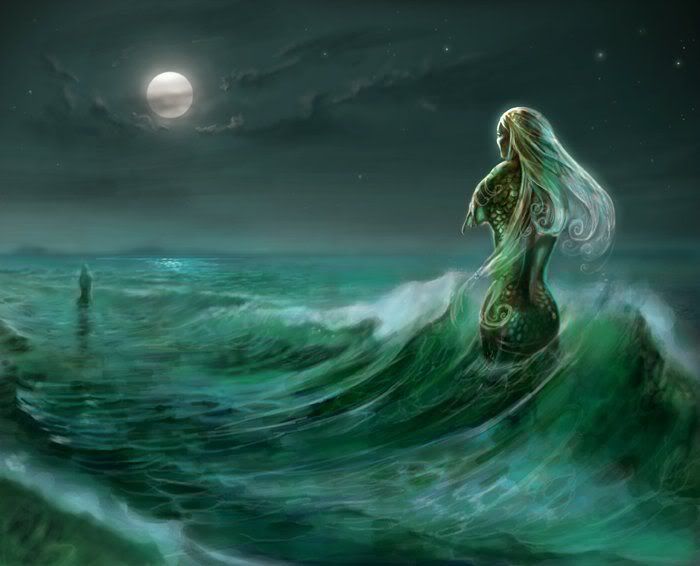
I have tried a couple of exercises in first person, but I get lost in the details and it drains the power of the scene. This last version, in third person, is a little more daring than the first few. I wonder if that's a sign of things to come?
It DOES mean that I'm off the first page... I'm onto page 5 tonight... with more to come. I swear it's like a blind man trying to describe an elephant though. I can't seem to visualize the whole behemoth yet.

Friday, March 8, 2013
"From the Ashes" Kindle Release Blogfest
I'm so happy today to share with and support my friend Jessica McKendry (16) on the release of her self published NOVEL, "From the Ashes" on Kindle. It's quite an achievement, getting through the publishing process. Jess, I salute you!
Most people probably lead with the novel cover and summary, but I'm going to lead with the author, because she's just so cool! So without further ado, here she is!
 Jessica McKendry was born in Michigan, yet grew up all over the Northeastern United States. She has lived in 7 different states, moved 15 times, and loves to travel. Jessica has been writing since she could read, but didn't write much more than poetry until she was 14 when she accidentally began writing what would become her debut novel two years later. Check out her website (www.jessicamckendry.com) or follow her on Twitter (@JessicaMcKendry) for more information.
And now the novel, which is available on Amazon here. You can leave a review on Goodreads here.

Most people probably lead with the novel cover and summary, but I'm going to lead with the author, because she's just so cool! So without further ado, here she is!

And now the novel, which is available on Amazon here. You can leave a review on Goodreads here.

Summary:
Jaina Indera has been preparing her entire life for the chance to prove herself a superior and loyal citizen of the Imperial Alliance. In order to do so, she believes she must win the galaxy-wide competition known as the Trials. With training at her Gifted School progressing swiftly, everything looks like it is on pace for her to achieve her dream…until a boy named Dragon enrolls in her class.
Suddenly doubting herself and everything she’s been taught to believe, Jaina and Dragon are teamed with six of their classmates for the chance to compete and achieve their dream: winning the Trials. Consisting of four different tests, the Trials are about to challenge these eight young adults to the limits of their abilities. But learning to work as a team is more difficult than they ever imagined and dark secrets from Dragon’s past emerge that put them in mortal danger. Now Jaina must discover what she’s really fighting for if she and her team have any hope of finishing the Trials…alive.
Exploring the nature of self-reliance and self-confidence, McKendry delivers a perceptive, nuanced portrait of the importance of teamwork and the strain it puts on individual desires and motivations. Playing with the concepts of dark and light, her novel is a complex coming of age story that encapsulates the complicated hero’s journey from student to leader. A dark tale of love and revenge, From the Ashes is a powerful reminder to think for yourself instead of blindly following what you’ve been taught to believe.
Subscribe to:
Posts (Atom)